Overview
Flowers Gallery is delighted to return to Art Basel Hong Kong with a group presentation, Trajectories of Togetherness, examining practices of care, repair, and relationality in the work of three cross-cultural artists, Jakkai Siributr, Movana Chen, and Luka Yuanyuan Yang, whose materially layered, palimpsestic approaches function as archives of transient human experience. Across textile, sculpture, and photography, the artists articulate modes of togetherness that are neither fixed nor singular, but continually negotiated through memory, exchange, and embodied process.
Movana Chen (b. 1975)
Movana Chen is a multidisciplinary artist whose practice explores cross-cultural communication through the deconstruction and reconstruction of paper-based materials, including maps, letters, and passports. Working across sculpture, installation, performance, and wearable forms, Chen proposes alternative systems of language and exchange.
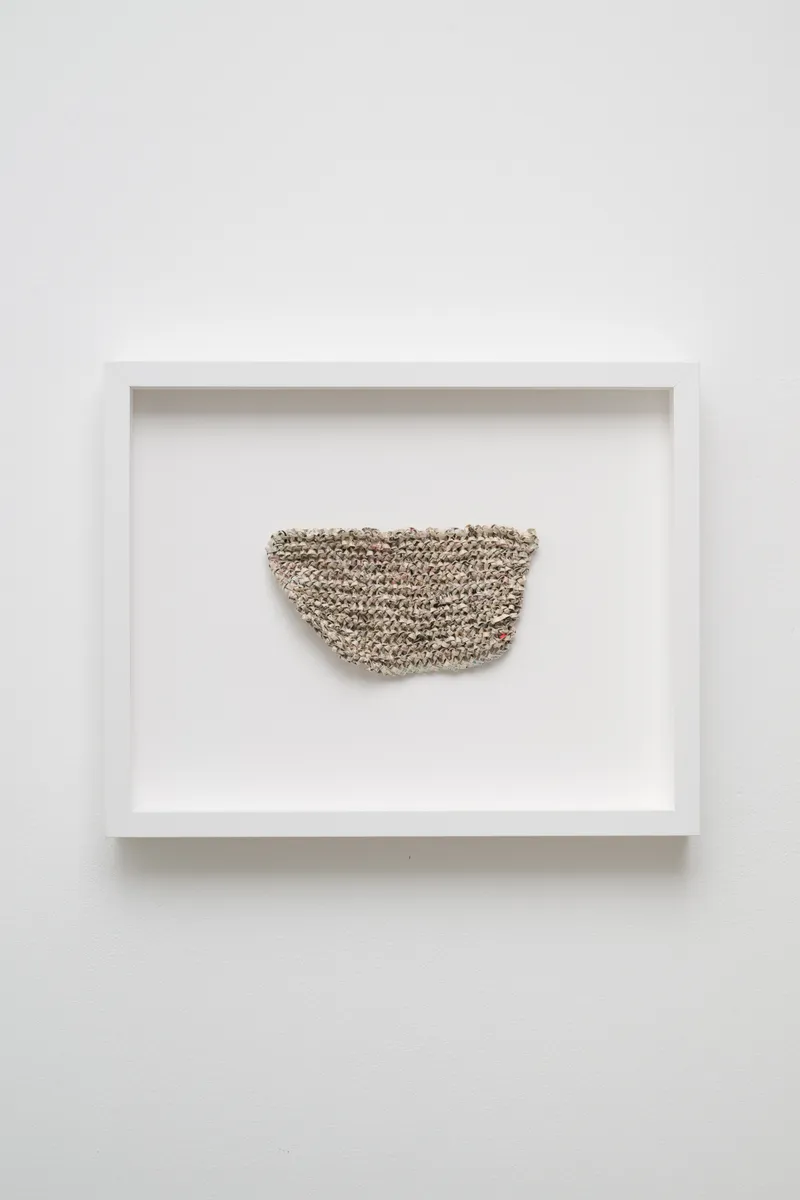
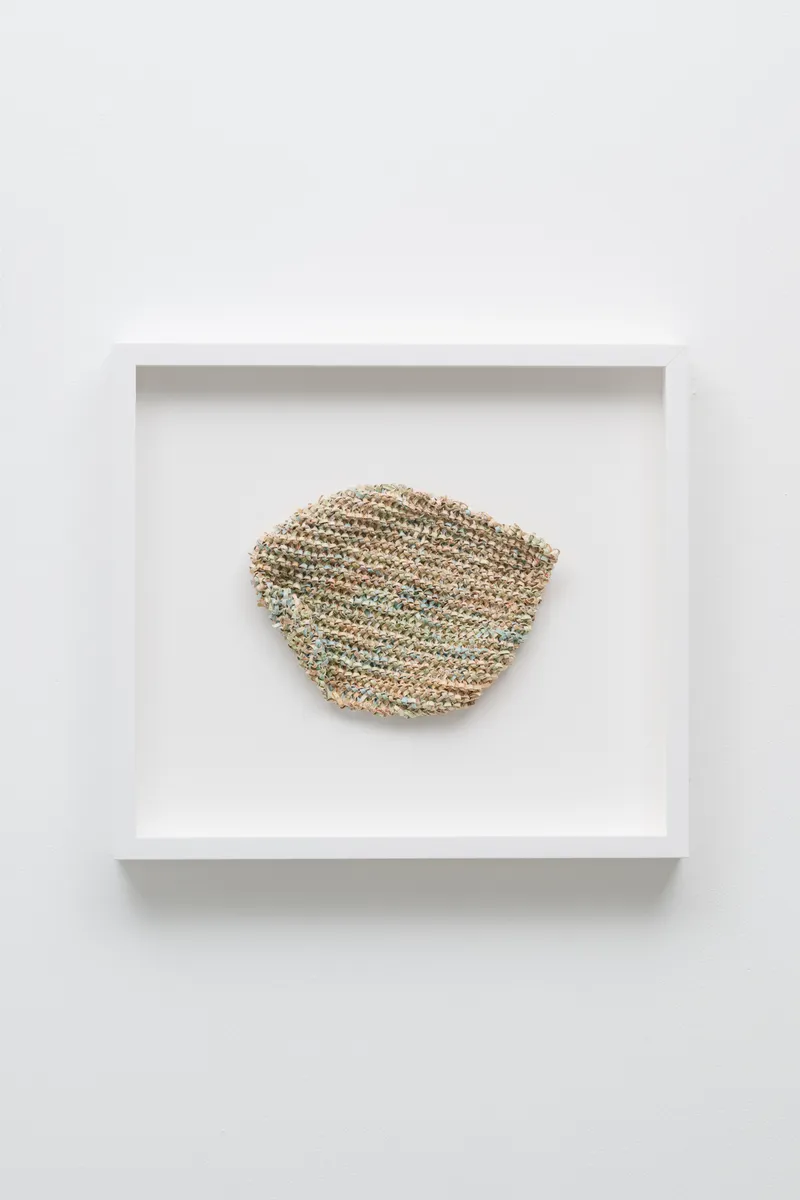
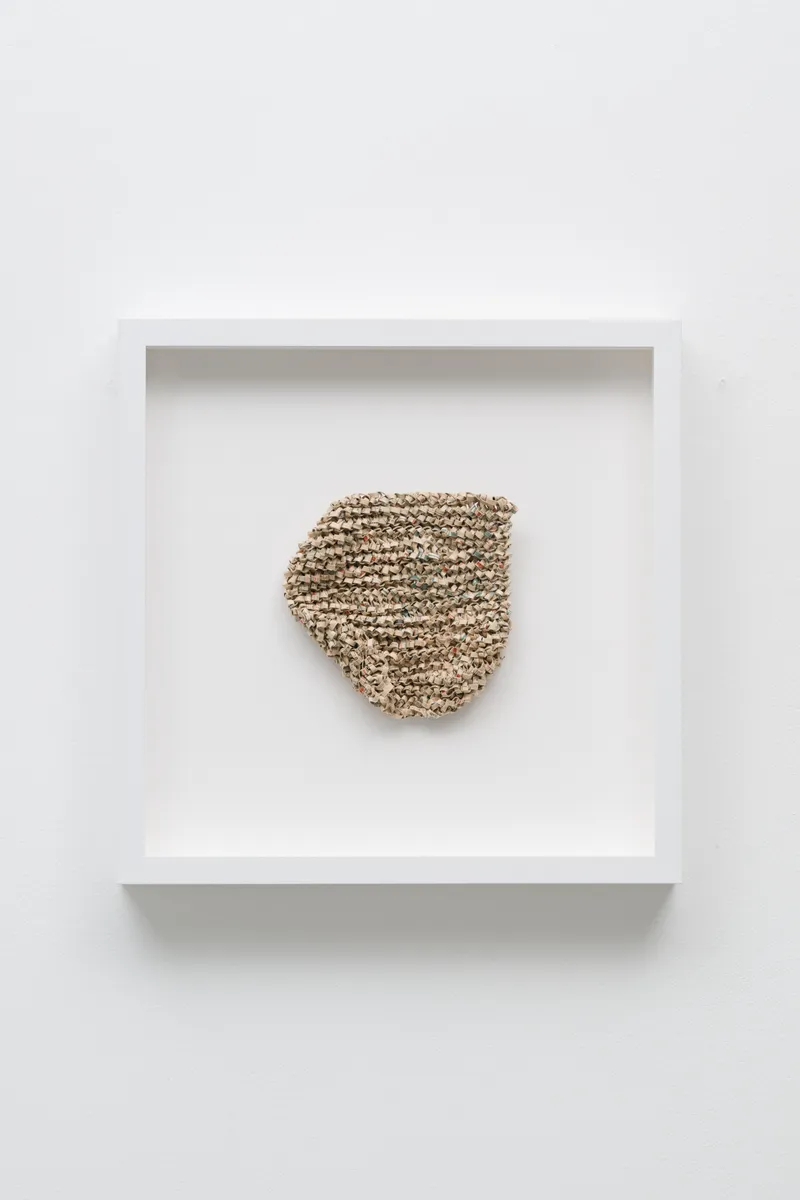
Movana Chen's practice is grounded in personal interaction and chance encounter. Through the collection and exchange of found paper materials, maps, letters, and documents marked by use, she has developed an evolving, affective archive from which her work emerges. Her new body of work, Archipelago of One (2025), composed of maps sourced from across the world, extends her investigation into the emotional and ontological attachments that bind individuals to place and culture.
Characteristic of Chen's methodology, the maps are shredded and reconstructed through knitting, enacting a semiotic rupture that recalls Saussurean models of signification. Conventional cartographic signifiers texts, grids, and symbols, which are disarticulated and subsumed within the work, severing their referential link to geographic signified such as territory, distance, and borders. In their place, Chen proposes a process of affective re-signification, whereby materiality itself becomes the primary carrier of memory, intimacy, and human connection. Installed as an atomized constellation, the reconstructed sculptural maps retain traces of their origins while collectively destabilizing the authority of geographic demarcation.



Jakkai Siributr (b. 1969)
Jakkai Siributr is one of Southeast Asia's leading contemporary textile artists. His intricately handcrafted tapestries and installations address social, political, and historical narratives in Thailand and the wider region, often foregrounding memory, displacement, and belief systems.
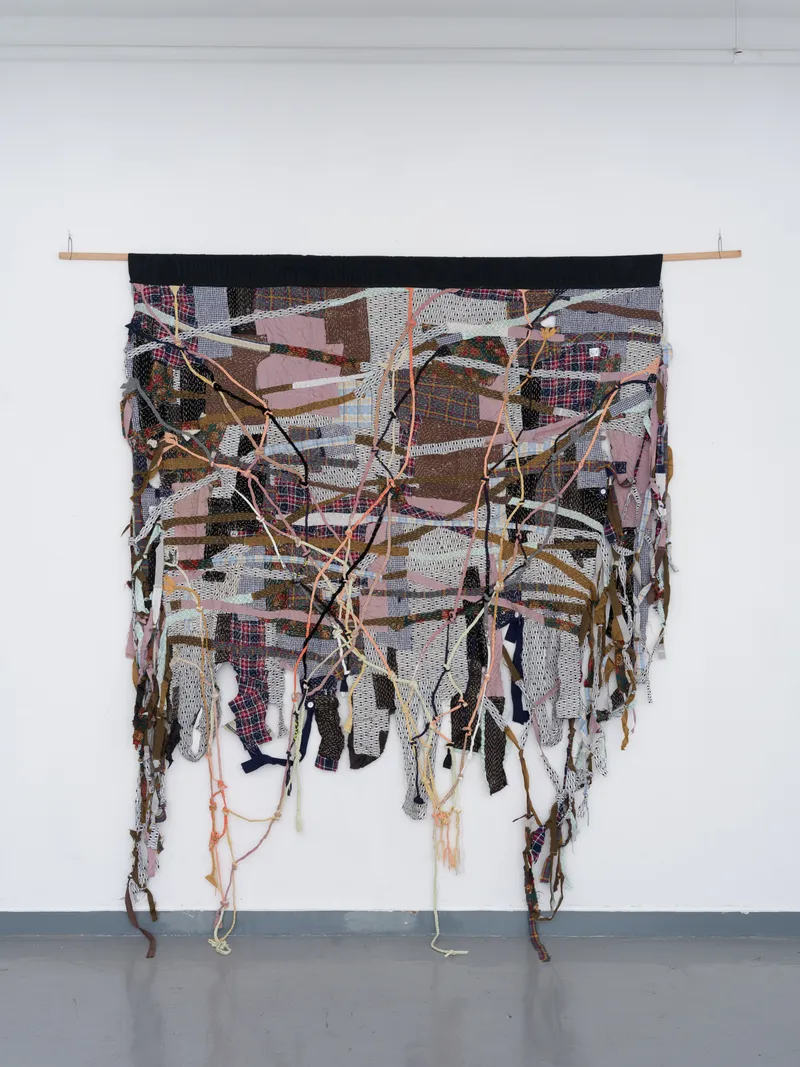
Donated materials underpin Jakkai Siributr's new body of work, Despatch, an immersive tapestry installation that reflects on ageing societies in Japan and beyond. The artist's deliberate use of the archaic spelling "Despatch" underscores the erosion of cultural practices and linguistic forms as intergenerational transmission weakens. Created for the 2025 Setouchi Triennale, the work is composed of garments collected from elderly residents of the Seto Inland Sea archipelago.
Drawing on the endangered tradition of boro, a Japanese practice of patchwork mending, Siributr disassembles and meticulously reconstructs these garments into large-scale textile works. The resulting tapestries function as collective repositories of lived experience, in which personal histories are embedded within the fabric itself. Through layering, repetition, and repair, Siributr produces a visual archive that resists erasure, offering continuity across generations through material remembrance.



Luka Yuanyuan Yang (b. 1989)
Luka Yuanyuan Yang is a visual artist and filmmaker working across photography, documentary film, installation, and performance. Her practice interweaves archival research with personal narrative to examine histories of migration, identity, and cultural memory.
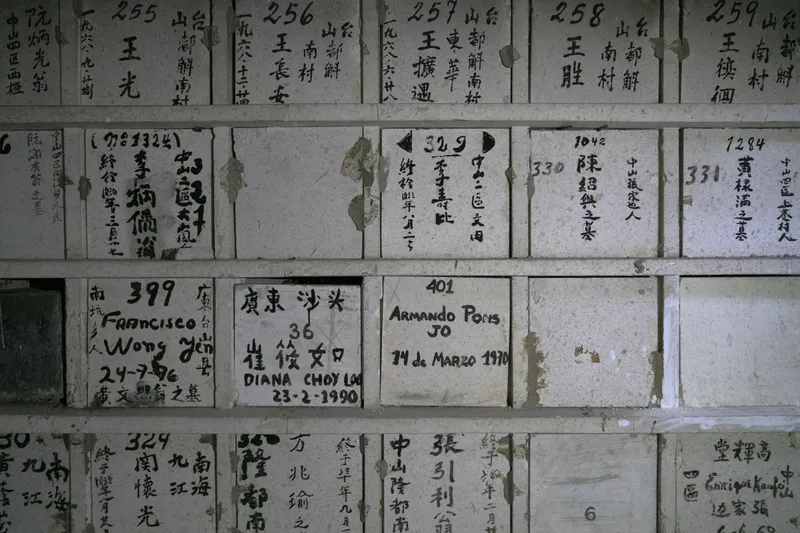
In her photograph piece Together, Luka Yuanyuan Yang addresses histories of migration, separation, and diasporic memory. Yang's project engages directly with the legacy of the Chinese Exclusion Act of 1882, which prohibited Chinese labour immigration to the United States and resulted in the prolonged separation of families. As the first U.S. law to ban immigration from a specific national group, its repercussions continue to shape contemporary immigration policy.
Through archival recovery and photographic collage, Yang reunites portraits of family members divided by this legislation, reconstructing bonds severed by law and geography. Her work operates as both historical intervention and affective repair, asserting continuity in the face of systemic rupture and offering a counter-archive that privileges lived experience over official record.